
5 min readby Marc
Embroidery and silicone-based logo applications can create different looks and feel on a jersey. Neither is universally better. This guide shows what to ask about the fabric, artwork, application method and sample before approving a production specification.
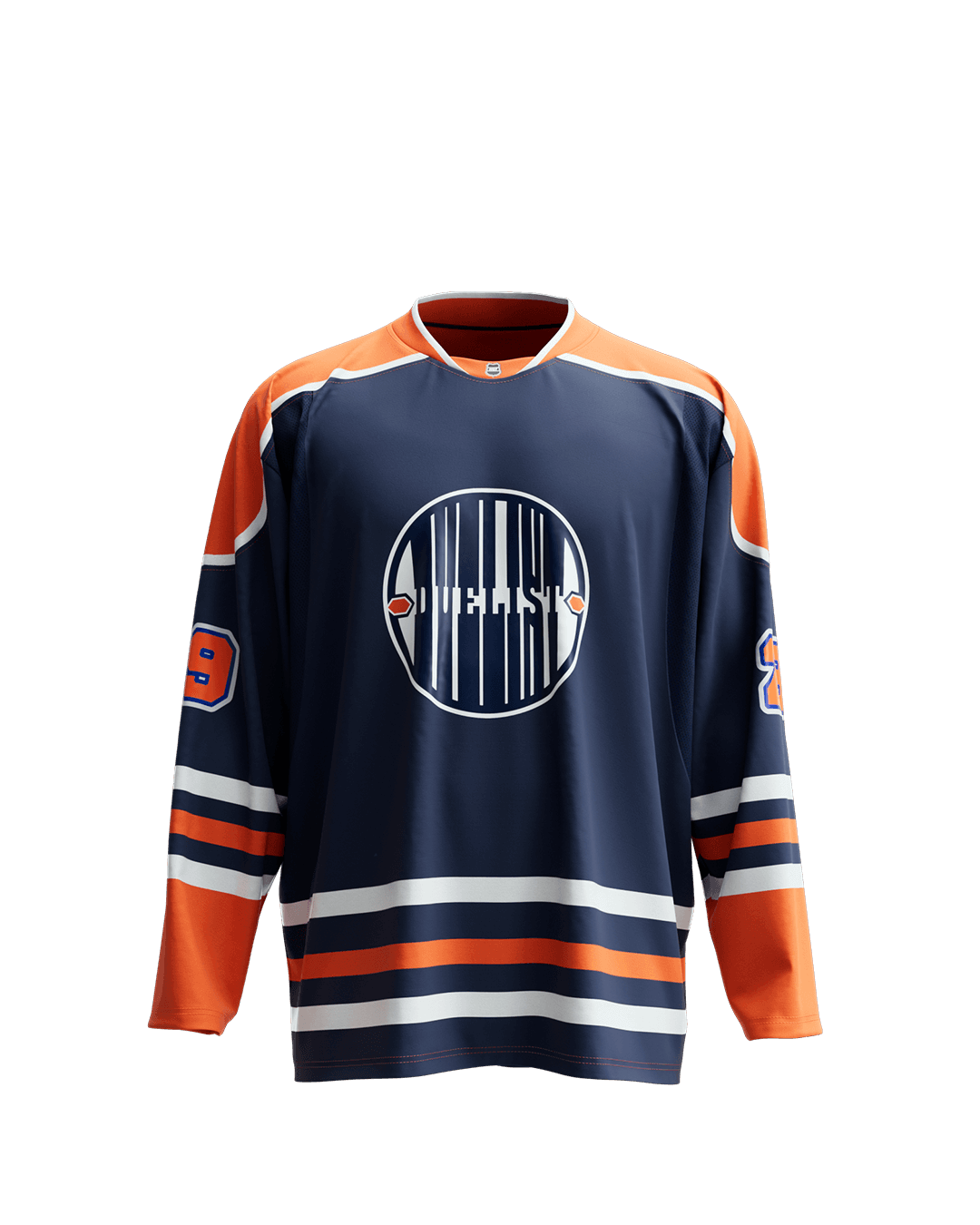
A club crest can look very different when stitched into a jersey or applied as a silicone-based badge or transfer. The appearance matters, but so do the fabric, wearer comfort, artwork detail and the producer's actual process. There is no reliable rule that one method is always more durable, more expensive or more “authentic” than the other.
Start with the exact garment and logo. Then ask the supplier to explain which decoration options are available for that product, what a sample can prove and what remains to be confirmed before a quote becomes an order.
Embroidery uses stitched thread to build a design. It usually has a tactile, textured surface. The outcome depends on the stitch program, thread, backing and fabric. A small, simple mark on a structured garment is a different job from a dense crest on a thin, stretchy match jersey.
“Silicone logo” can describe more than one construction, including a separately made badge or a transfer applied to the garment. Ask which material and attachment method the producer proposes. The edge, thickness, flexibility, surface finish and placement can differ between processes. A flat image of a logo does not describe those physical properties.
Do not use the terms silicon and silicone interchangeably in a production brief. Silicone is the polymer material commonly meant in this decoration context; “silicon printing” in an old article may refer to a different process or simply use the wrong word. Request the supplier's technical description rather than assuming the label identifies a finished specification.
Ask for the exact garment reference, fiber content, stretch behavior and care requirements. Stitches and their backing can affect how a light fabric drapes or stretches. A transfer or badge must also be compatible with the fabric, surface treatment and intended washing conditions. Both approaches need a sample on the chosen garment if appearance and comfort are important.
For a playing kit, test the decorated area while worn and moving. Look for puckering, stiffness, edges that lift, uncomfortable backing or a mark that sits differently from the digital preview. For supporter wear, you may weigh tactile detail and appearance differently. A sample on another fabric is useful inspiration, but it is not proof for this exact jersey.
Provide the original crest or logo file, intended dimensions, color references and placement. Ask what detail can be reproduced clearly: small lettering, thin lines, gradients, multiple colors and any required sponsor elements. The supplier may need to simplify a design or change its size for the chosen method.
Confirm who owns the rights to the club crest, sponsor marks and any third-party artwork. Keep one approved version of the design. If you compare two techniques, ask for comparable samples at the same size and placement rather than relying on unrelated example photos.
Request the product reference, decoration method, application position and size, quantity by variant, setup cost, sample path, care guidance and delivery destination in the same brief. Ask whether the badge or transfer is produced separately, how it is attached, and who checks the result. Price and minimum quantity depend on those details; neither technique has a universal cost advantage.
If a supplier claims a particular durability standard, ask for the test method, fabric and care conditions behind it. A statement about one sample or material should not be carried over to every jersey. Include the approved sample and digital proof in the order specification so production is measured against the same version.
On supported MerchandAise products, interactive 3D can help a team review logo placement, scale and the overall look of a design. It does not establish that embroidery or a silicone application is available on that item, nor can it prove physical feel or wash performance. Save the design you want reviewed, then request a supplier-confirmed production option and quote for the exact garment, artwork and quantity.
You can browse jerseys and apparel for a starting product, or share a club brief if you need a particular crest treatment. The review should answer what can actually be made and what proof or sample is appropriate before approval.
Is embroidery always more durable? No universal comparison is reliable. Durability depends on the fabric, stitch program or attachment method, construction and care. Ask for evidence and a relevant sample.
Can a silicone badge show more detail? It depends on the chosen process, dimensions and artwork. Have the supplier review the exact crest instead of assuming a technique can reproduce every element.
Can a 3D render confirm the finished logo texture? It can support visual planning on a compatible product, but a physical sample or production proof is needed for feel, edge quality and material behavior.
Does Nike always use silicone on “Authentic” jerseys and embroidery on “Replica” jerseys? Do not rely on that as a universal rule. The original article made the claim without a product-specific source. If you are comparing a particular branded jersey, check its current official product details and inspect that exact item; do not transfer its construction to a different club, season or supplier.
Published May 25, 2025 - by Marc
Updated October 1, 2026